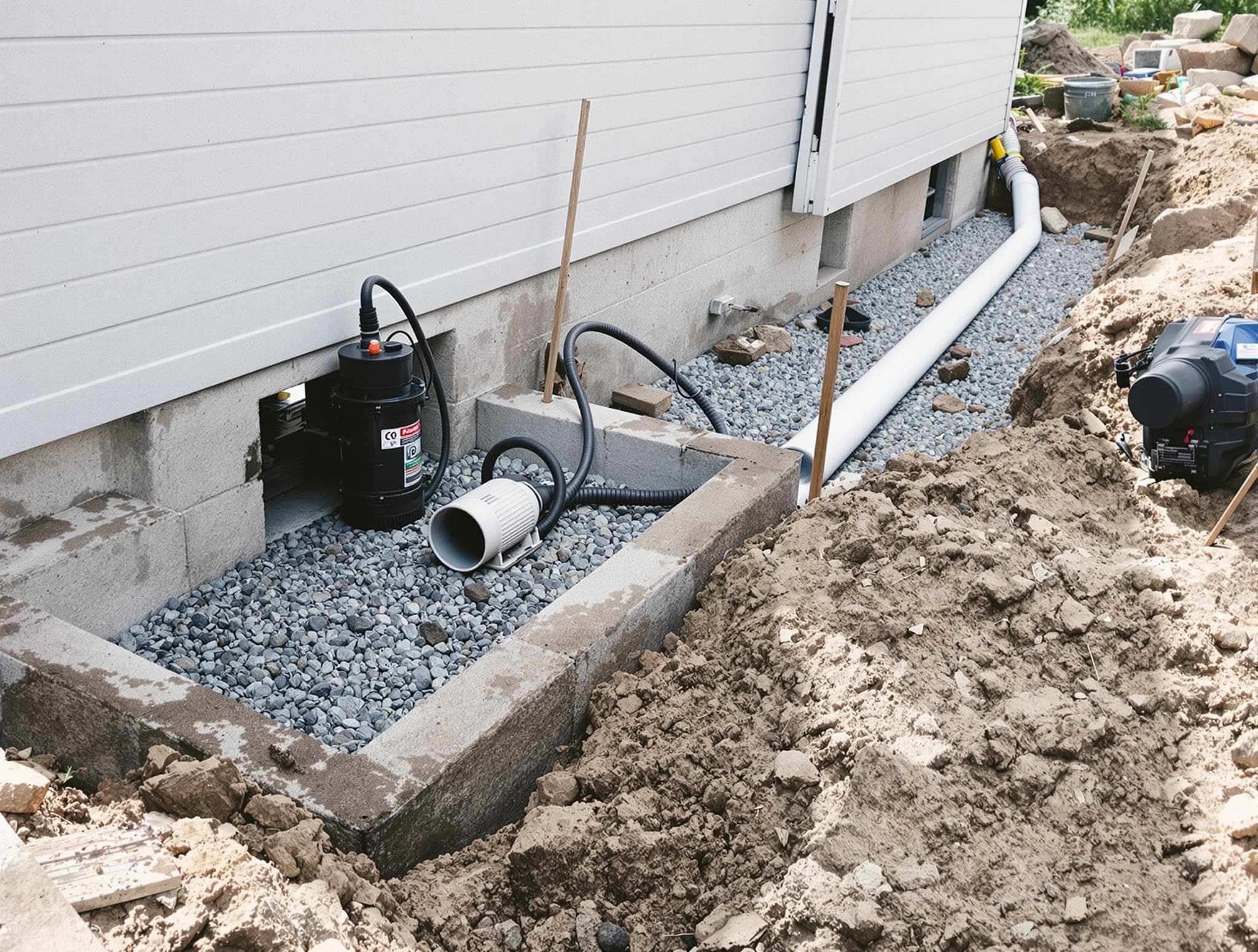
Water in a Long Island basement is not one problem — it is three different problems that look identical from the inside. A wet floor after every rainstorm, a damp wall between storms, and water seeping through a crack in the footing all require different fixes. The national waterproofing franchises often install the same interior drain system regardless of diagnosis, which is why we get calls from homeowners who paid $8,000 for a French drain that didn't stop their leaking because the real problem was surface runoff, not hydrostatic pressure.
This guide covers the three water sources, the two primary system types, Long Island-specific factors that affect which system you need, and realistic costs for Nassau and Suffolk County homeowners.
Why Long Island Basements Flood
The Water Table
Long Island's water table is shallow. Across much of Nassau's south shore — Massapequa, Merrick, Freeport, Baldwin — the water table sits 3 to 6 feet below grade in normal conditions. After prolonged rain or snowmelt, it rises to within 1 to 2 feet of the surface. Block and poured concrete foundations in that range experience direct hydrostatic pressure: groundwater pushes in through every crack, mortar joint, cold joint, and tie rod hole in the wall. This is the Long Island-specific problem most waterproofing contractors from elsewhere don't design for properly.
Clay Soil Saturation
Interior Nassau County — Mineola, Garden City, Westbury, Hempstead — has clay-heavy glacial till soil that holds water rather than draining it. After a heavy rain, this clay stays saturated for 4 to 7 days, pressing against the foundation wall the entire time. The soil doesn't drain; it squeezes. Basements in clay-soil areas of Nassau often stay dry all summer and suddenly flood in spring when the clay finally saturates from snowmelt.
Surface Drainage Failures
The third and often most overlooked driver: water that shouldn't reach the foundation at all. Downspouts discharging within 3 feet of the foundation wall, paved driveways and patios that slope toward the house, and window wells without drains all funnel surface water directly at the foundation. For this category, the fix starts outside — re-grading, extending downspouts, adding drain tile at grade — before any interior system makes sense. A French drain that intercepts water coming in through a poorly aimed downspout is like bailing a leaking boat without plugging the hole.
Interior vs. Exterior Waterproofing
Interior French Drain Systems
The most common and most cost-effective solution for Long Island basements with hydrostatic or clay-saturation problems. We cut the concrete slab at the footing perimeter — typically 12 inches wide — excavate to below the footing, and install a slotted perforated pipe bedded in washed gravel. Water that comes through the wall or rises from below is intercepted at the footing and routed to a sump pit. A battery-backed sump pump discharges water away from the foundation. The slab is patched over the drain. Most jobs complete in 2 to 3 days.
$6,000 – $12,000
Interior French drain + battery-backed twin sump, full basement perimeter — Nassau & Suffolk County
Exterior Waterproofing
The most complete waterproofing solution: excavate to the footing on the exterior, clean and prepare the foundation wall surface, apply a rubberized membrane (EPDM or polymer-modified asphalt), install a dimple drainage board to protect the membrane and create an air gap, and backfill with free-draining coarse gravel. This stops water at the source rather than intercepting it inside. Exterior waterproofing is the right call when surface runoff is the primary driver, when the existing interior system has failed, or when excavation is already open for another reason (utility work, pool installation). It costs 40–60% more than interior and disrupts the yard significantly.
$15,000 – $30,000
Full exterior excavation, dimple membrane, drain tile — Nassau & Suffolk County
Vapor Barriers and Dehumidification
Even after a drain system is installed, residual moisture vapor can keep a basement feeling damp. A 20-mil reinforced vapor barrier installed over the walls and sealed to the drain system eliminates wall seepage migration into the basement air. A properly sized commercial dehumidifier — sized to cubic footage and average relative humidity, not picked off a shelf — maintains target humidity below 55% RH. These components often eliminate the musty odor and mold conditions that persist after drainage-only installs.
Long Island-Specific Waterproofing Factors
Sump Pump Sizing for LI Conditions
A single 1/3-horsepower sump pump is adequate for upland sites with moderate groundwater. It is not adequate for Nassau south shore homes where the water table can rise to within 12 inches of the basement floor during a nor'easter. We size sump systems to the worst-case water volume — typically a twin-pump configuration with a primary (3/4 HP) and a battery-backup unit that activates during power outages, which are common during the storms that also drive the worst water intrusion. A dead sump pump during a flooded basement is a $30,000–$80,000 finished-basement loss. Twin pumps with battery backup eliminate that risk for $800–$1,500 additional cost.
Hurricane and Storm Surge Exposure
South shore communities in Long Island sit in FEMA flood zones. Homes in Massapequa Park, Merrick, Freeport, Long Beach, and coastal Babylon still show storm-surge foundation damage from Hurricane Sandy in 2012. Storm surge is a different problem from hydrostatic pressure — it can push several feet of water against a foundation in hours, overwhelming systems designed for normal groundwater loads. Homes in flood zones should specify drain systems sized to storm-surge volumes, not just seasonal water table levels. We document all work with photos and written specifications for insurance purposes.
Permit Requirements by Municipality
Interior French drain and sump installation does not require a building permit in most Nassau and Suffolk towns. If the work involves any structural element — underpinning, wall anchors, or carbon fiber in the same project — the permit threshold changes. Exterior waterproofing that involves excavating adjacent to a property line may require a permit depending on depth and proximity. We evaluate every job and pull what is needed. Nassau County Building Department filings for structural work require a PE-stamped plan, which we provide.
How to Evaluate a Waterproofing Contractor on Long Island
- +Written diagnosis identifying water source before proposing a solution
- +Fixed written quote — no changes after signing
- +Warranty that transfers to future home buyers
- +Nassau or Suffolk HIC license number you can verify
- +References from local Long Island jobs
- +Company operating under the same name for 5+ years
- !Same solution proposed without diagnosing your water source
- !High-pressure same-day signing discounts
- !Warranty held by a different LLC or holding company
- !No license number provided
- !Extremely low quote that doesn't include pump or discharge
- !Company can't show proof of insurance
Foundation Waterproofing Service
Our foundation waterproofing service page covers our full diagnostic and installation process, system components, written no-seepage warranty, and what to expect from assessment through completion.
See Full Service DetailsFoundation Crack Repair in Nassau County
Water intrusion and foundation cracks often go together. Our Nassau County crack repair guide covers crack types, what they mean structurally, and when water infiltration through a crack signals a bigger problem than waterproofing alone can solve.
Read the Guide