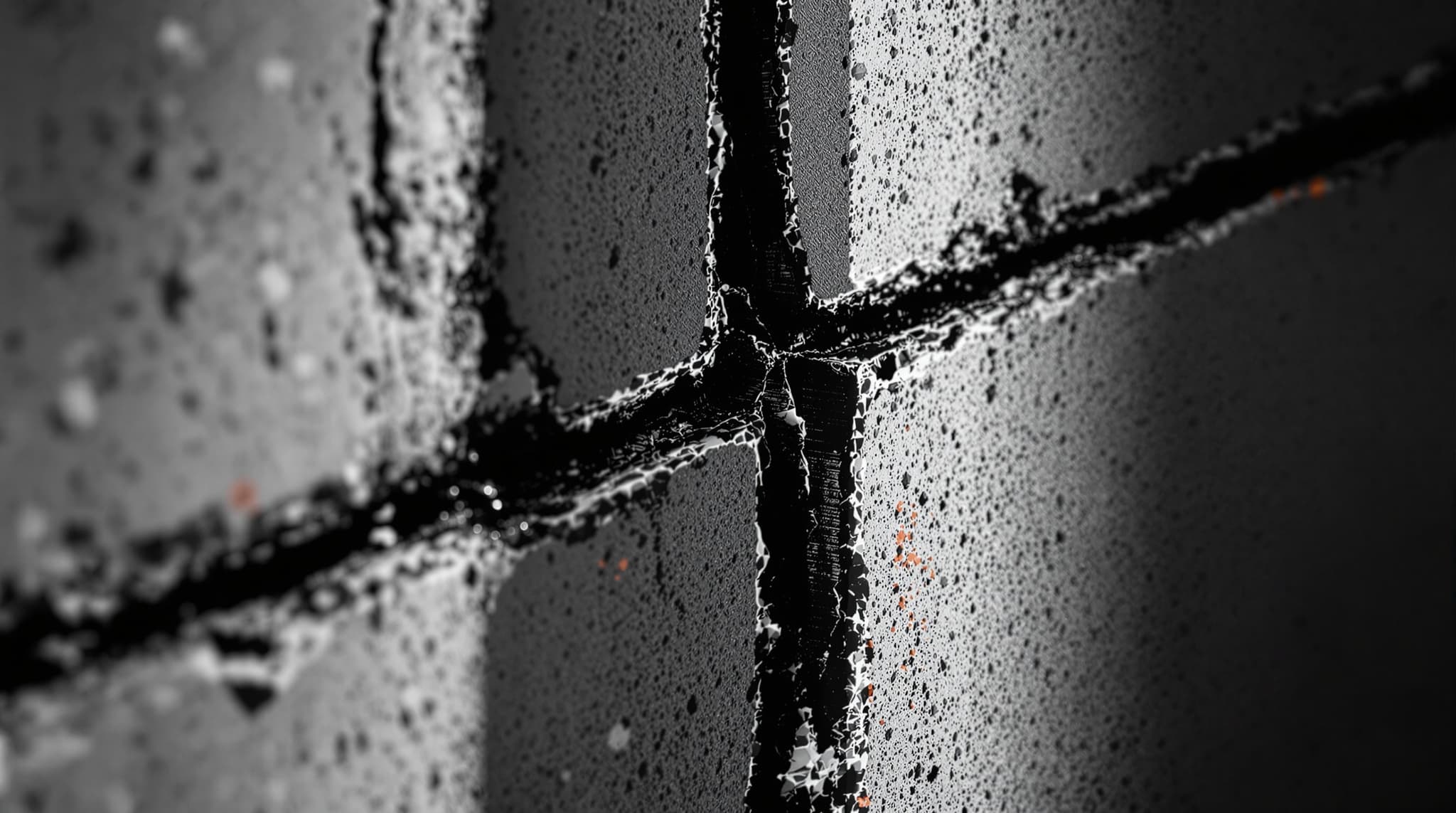
Nassau County homes crack. That is not a disaster — it is a predictable consequence of the housing stock and the soil underneath it. Most Nassau homes were built between 1940 and 1970 on unreinforced block foundations. The clay-heavy glacial till soil that makes up most of Nassau County expands when wet and contracts when dry. The frost depth here is 36 inches, meaning the ground cycles through significant freeze-thaw stress every winter. Layer in 60-plus years of seasonal moisture and you have the conditions that produce cracked foundation walls across every zip code in Nassau — from Massapequa to Great Neck.
The question is never whether a crack matters. The question is which type it is, whether it is active, and what the correct repair looks like. This guide walks through all of it.
Types of Foundation Cracks
Horizontal Cracks
Horizontal cracks running across the middle of a block foundation wall are the most serious crack type. They indicate lateral soil pressure pushing in against the wall — exactly what happens in Nassau County after wet winters when saturated clay soil expands. A horizontal crack at mid-wall height means the wall is bending inward under load. Left unrepaired, bowing progresses until the wall fails.
Repair: Carbon fiber straps for walls with under 2 inches of deflection, or steel wall anchor systems for more severe movement. Do not use crack injection alone on horizontal cracks — it patches the symptom without addressing the load.
$2,000 – $8,000+
Carbon fiber straps or wall anchors, Nassau County
Stair-Step Cracks in Block Foundations
Stair-step cracks follow the mortar joints diagonally, stepping down through the block courses. These indicate differential settlement — one section of the foundation is sinking faster than another. This pattern is very common in Nassau County's 1950s and 1960s housing stock, where original footings often sat on poorly compacted fill or inconsistent soil. Epoxy injection or tuck-pointing can seal the crack, but if settlement is still active, pier installation addresses the root cause.
$800 – $2,500 (injection / tuck-point)
Pier systems additional if active settlement confirmed
Vertical and Diagonal Cracks
Vertical cracks running straight up and down, or diagonal cracks at corners, are usually shrinkage cracks from concrete curing. They are less structurally concerning than horizontal cracks but should be sealed to prevent water infiltration. Epoxy injection restores tensile strength and closes the water pathway. A vertical crack that is actively growing — you can track this by marking the ends with a pencil and dating it — warrants a professional assessment before deciding to seal.
$500 – $1,500
Epoxy injection, sealed and warranted
Bowing and Leaning Walls
A bowing or leaning wall is a horizontal crack that has progressed. If you sight down the wall from the corner and the face curves inward, that is active bowing. Run a straight edge vertically against the wall — any gap at center confirms the bow. Leaning basement walls in Nassau County are an immediate concern. Call a structural engineer or a licensed foundation contractor today. For a full breakdown of causes, repair options, and cost ranges specific to Long Island, read our leaning basement wall repair guide for Long Island.
Foundation Crack Repair Methods
Epoxy Injection
The gold standard for settled, non-moving cracks. Two-part structural epoxy is pressure-fed through ports installed along the crack face until it fills the full void depth. Once cured, the epoxy is stronger than the surrounding concrete and restores tensile bond across the crack plane. A one-day job for a single crack. Not appropriate for cracks that are still moving — epoxy will crack again.
Carbon Fiber Straps
For horizontal cracks and bowing walls, carbon fiber straps are the cleanest permanent repair available. Structural-grade carbon fiber fabric is saturated with two-part epoxy and bonded vertically to the prepared wall surface, floor-to-ceiling. The strap becomes structurally continuous with the wall and resists further inward movement. Ten times stronger than steel by weight. No excavation. One-day installation. Life-of-home warranty. This is carbon fiber foundation repair done correctly.
Interior Drain Tile + Sump Pump
When water infiltration is the primary problem rather than structural movement, an interior perimeter French drain tied to a battery-backed sump system manages hydrostatic pressure from the inside. This does not stop water at the wall — it intercepts it at the footing and removes it before it causes damage. Interior waterproofing runs $6,000–$12,000 for a full basement perimeter and installs in 2–3 days.
Exterior Waterproofing
The most complete solution: excavate to the footing, apply a rubberized membrane, install a dimple drainage board, and backfill with free-draining aggregate. Stops water at the source rather than managing it inside. The most invasive and most expensive option at $15,000–$30,000. Used when exterior conditions create chronic hydrostatic pressure that interior systems cannot adequately handle, or when the exterior excavation is already open for other reasons.
Nassau County-Specific Considerations
Nassau County's clay soil is a major factor. Clay expands significantly when wet and contracts when dry — a cycle that drives relentless lateral pressure on block foundation walls. La Nina wet winters in 2022–2024 caused a measurable spike in foundation crack calls across Nassau, as prolonged soil saturation pushed walls harder and longer than typical winters. If your basement walls developed new horizontal cracks in the last two years, wet-winter soil expansion is the likely cause.
South Shore towns face additional risk. Homeowners in Massapequa, Merrick, and Freeport deal with hurricane and storm surge risk that drives hydrostatic pressure against basement walls and floor slabs well beyond what typical upland sites experience. If your home is in a FEMA flood zone, document all foundation repairs carefully for insurance purposes.
Permits: The Nassau County Building Department requires permits for structural foundation work. Epoxy crack injection typically does not need a permit. Carbon fiber strap systems, wall anchors, and pier installations do. We handle all permit filings with PE-stamped engineering drawings — the homeowner never needs to visit a municipal office. Budget 3–6 weeks for permit processing before structural work begins.
See the Nassau County foundation repair area page for town-specific details and our full Nassau service coverage.
When to Call Immediately vs. Monitor
- !Horizontal crack wider than 1/4 inch
- !Water actively entering through a crack
- !Wall visibly bowing inward
- !Stair-step cracks that are growing
- !Doors or windows sticking suddenly
- !Floor slab cracking or heaving
- →Hairline vertical cracks under 1/8 inch
- →Old cracks that have been sealed and stable
- →Stair-step cracks with no recent growth
- →Diagonal shrinkage cracks, no water
- →Cracks your inspector has previously noted as stable
Foundation Crack Repair Service
Our foundation crack repair service page covers our full diagnosis and repair process, pricing ranges, and what to expect on the day of repair. Written diagnosis on every job. 30-year material warranty on injection products.
See Full Service Details