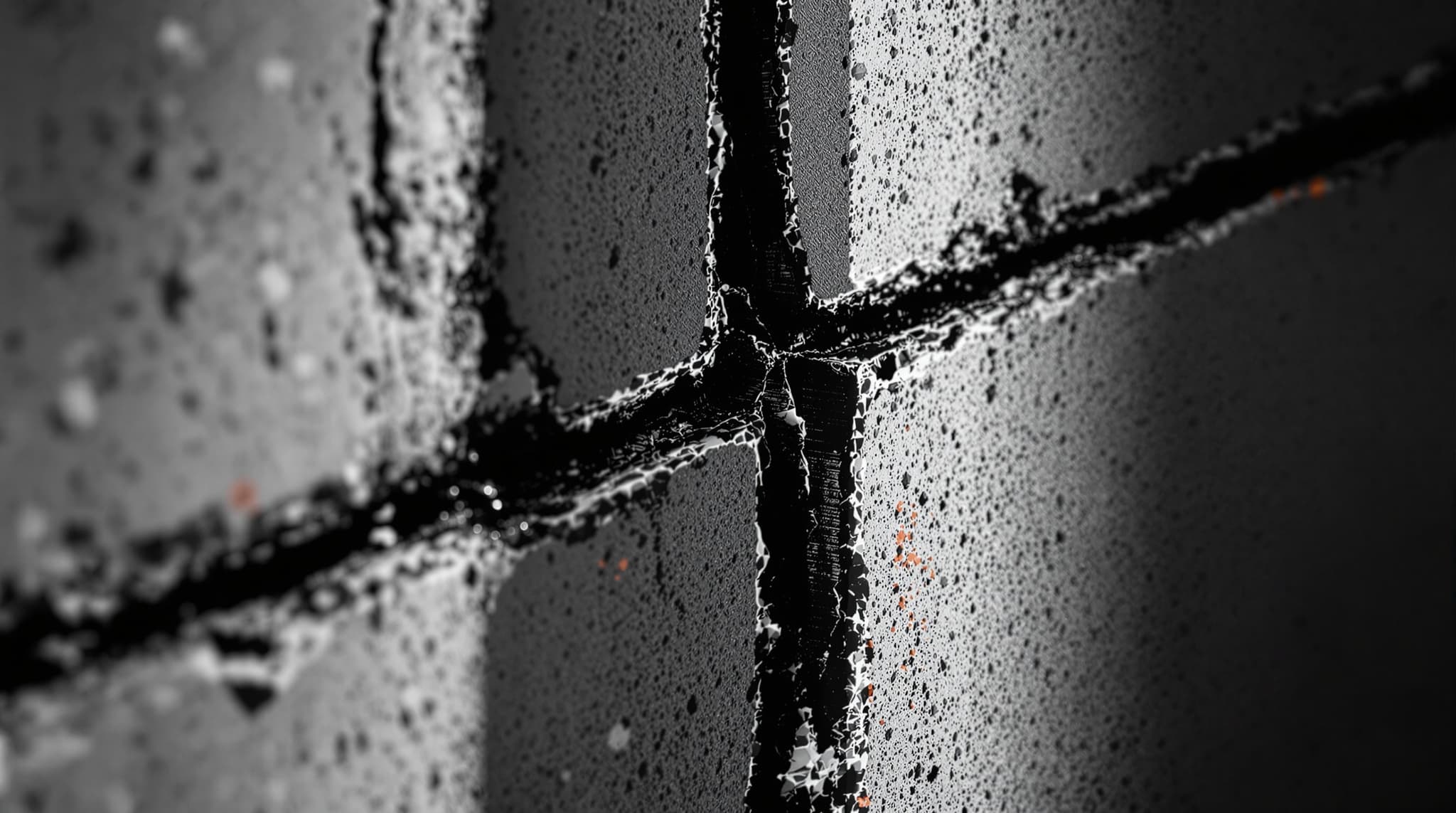
A crack in your foundation wall is not automatically a crisis — but it is never something to ignore. The difference between a $500 fix and a $25,000 structural project often comes down to how early the crack was diagnosed and whether the right repair method was used the first time. On Long Island, where clay soils, a shallow water table, and harsh freeze-thaw cycles put unique stress on residential foundations, crack patterns tell a specific story about what is happening underground.
This guide covers the four types of foundation cracks we see most often across Nassau County and Suffolk County, what causes each one, the repair methods that work (and the ones that waste money), realistic cost ranges, and when you need a professional versus when monitoring is fine.
Types of Foundation Cracks
Vertical Cracks
Vertical cracks — running straight up and down or within 30 degrees of vertical — are the most common crack type in poured concrete foundations on Long Island. The majority result from concrete curing shrinkage: as the concrete dries and hardens after the pour, it contracts slightly, and the tension creates a crack, usually near the center of a long wall or at a change in wall thickness. These cracks typically appear within the first two to five years after construction and stabilize once the concrete has fully cured.
Most vertical shrinkage cracks are hairline width (under 1/16 inch) and are not structural — they do not affect the wall's load-bearing capacity. However, they are the most common entry point for water in Long Island basements, especially homes in Bay Shore, Copiague, and Farmingdale where the water table is close to the surface. A vertical crack that leaks needs sealing even if it is not structural, because repeated water infiltration leads to efflorescence, mold, and eventually deterioration of the concrete around the crack.
Horizontal Cracks
Horizontal cracks are the most serious crack type in residential foundations. They indicate lateral soil pressure exceeding the wall's design capacity — the soil outside is pushing the wall inward. On Long Island, horizontal cracks appear most often in block (CMU) foundations in older homes built before 1970, typically at the midpoint of the wall height where bending stress is greatest. Poured concrete walls can develop horizontal cracks too, usually along a cold joint where the footer meets the wall or where a construction joint was placed during the pour.
A horizontal crack accompanied by any inward deflection — even 1/4 inch — means the wall is actively bowing and the problem is progressing. This is not a crack you inject and walk away from. The wall needs stabilization with carbon fiber straps, wall anchors, or in severe cases, full wall replacement. We see horizontal cracking most frequently in interior Nassau County towns — Garden City, Mineola, Westbury, Hempstead — where clay-heavy glacial till soil holds water against the wall and expands when saturated, generating sustained lateral pressure that exceeds what the original builder designed for.
Stair-Step Cracks
Stair-step cracks follow the mortar joints in block, brick, or stone foundations, creating a distinctive zigzag pattern. They almost always indicate differential settlement — one section of the foundation is sinking more than an adjacent section, and the wall is cracking along its weakest plane (the mortar joints) as it tries to accommodate the uneven movement. The crack typically starts at a corner and runs diagonally toward the opposite corner, stepping along each horizontal and vertical mortar line.
Stair-step cracks are structural. The wider the crack and the more displacement across its faces (one side higher or further in than the other), the more settlement has occurred. On Long Island, stair-step cracks are common in older homes in Levittown, Hicksville, and Massapequa where the original footings were undersized for the soil conditions, and in waterfront communities where sandy fill soil compresses under sustained load. Repair requires addressing the settlement itself — usually with helical or push piers — not just filling the crack.
Diagonal Cracks
Diagonal cracks run at roughly 45 degrees, typically radiating from the corners of windows, doors, or other openings in the foundation wall. They indicate concentrated stress — the wall is being loaded unevenly, and the stress is greatest at the geometric stress-riser points around openings. Diagonal cracks can result from settlement (one end of the wall dropping), overloading from above (a point load from a beam or column that wasn't properly distributed), or thermal expansion and contraction cycles.
Diagonal cracks wider than 1/8 inch or showing displacement are structural and require professional assessment. We evaluate whether the crack is caused by settlement (requiring piers), soil pressure (requiring wall reinforcement), or a load-distribution issue (requiring engineering redesign of the bearing point). In Long Island homes, we commonly see diagonal cracks around basement window openings in ranch-style and split-level homes from the 1960s and 1970s — construction styles prevalent in Deer Park, Lindenhurst, and Babylon.
Why Long Island Foundations Crack
Clay Soil Expansion and Contraction
Long Island's geology is a product of glacial deposition. The terminal moraine that runs through the center of the island left behind clay-heavy glacial till — particularly dense in interior Nassau County towns like Garden City, Westbury, Mineola, and East Meadow. This clay soil expands when it absorbs water and contracts when it dries, creating a seasonal push-pull cycle against foundation walls. In spring, saturated clay exerts lateral pressure that can exceed the wall's design capacity, especially on older block foundations. In dry summer months, the clay shrinks away from the wall, then re-expands with fall rains. This repeated cycle progressively weakens the wall and widens existing cracks over years.
Freeze-Thaw Cycling
Long Island experiences 50 to 70 freeze-thaw cycles per winter season — days where the temperature crosses the 32-degree threshold in both directions within 24 hours. Water that has infiltrated a hairline crack freezes, expands by 9% in volume, and exerts approximately 2,000 PSI of pressure on the crack walls. This hydraulic wedging widens the crack incrementally with each cycle. A crack that was 1/32 inch wide at the end of summer can be 1/8 inch wide by spring. This is why we recommend sealing even non-structural cracks before winter — the cost of a $500 polyurethane injection now prevents a $3,000 structural repair two winters later.
Shallow Water Table
The Long Island aquifer system keeps the water table within 3 to 8 feet of grade across much of Nassau's south shore and western Suffolk County. In communities like Copiague, Amityville, Lindenhurst, and Bay Shore, the seasonal high water table can reach within 1 to 2 feet of the basement floor. This creates constant hydrostatic pressure against the foundation — water pushing through every crack, cold joint, tie-rod hole, and porous section of the concrete. A crack that would stay dry in a home with deep, well-drained soil becomes a persistent leak on Long Island because water pressure is actively driving moisture through the opening year-round.
Settlement from Poor Soil Bearing
Many Long Island homes were built on fill soil or poorly compacted native soil, particularly in post-war developments (1945–1970) where construction speed was prioritized over soil preparation. Over decades, this soil compresses unevenly under the weight of the foundation, causing differential settlement — one section of the footing drops while an adjacent section remains stable. The resulting stress creates stair-step cracks in block walls and diagonal cracks in poured walls. Waterfront areas in Suffolk County — Bay Shore, Babylon, Islip — often have sandy fill that was placed during development and has been settling slowly for 50 to 70 years.
Foundation Crack Repair Methods
Epoxy Injection
Epoxy injection is the gold-standard repair for structural cracks in poured concrete walls. Injection ports are installed along the crack at 6 to 8 inch intervals, the crack surface is sealed with an epoxy paste, and low-pressure injection fills the crack from bottom to top with a structural-grade epoxy resin. The cured epoxy bonds the crack faces together with tensile strength exceeding that of the original concrete — typically 7,000+ PSI versus 3,000–4,000 PSI for the surrounding wall. The repair is permanent on a stable crack.
$800 – $2,500 per crack
Structural epoxy injection, full-depth fill, port installation — Nassau & Suffolk County
Polyurethane Foam Injection
Polyurethane injection is the correct repair for non-structural cracks that are leaking water. The expanding polyurethane foam fills the crack, chases water through the full wall thickness, and cures into a flexible seal that accommodates minor seasonal movement without re-cracking. Unlike epoxy, polyurethane does not restore structural capacity — it is a waterproofing repair, not a structural repair. This distinction matters, and using polyurethane on a structural crack is a mistake we see often when homeowners hire general handymen instead of foundation specialists. Polyurethane injection is fast (30–60 minutes per crack), minimally invasive, and significantly less expensive than epoxy.
$400 – $900 per crack
Polyurethane injection for non-structural leaking cracks — Nassau & Suffolk County
Carbon Fiber Straps
When a wall is bowing, leaning, or has horizontal cracking, crack injection alone will not solve the problem — the wall needs reinforcement to resist the ongoing lateral soil pressure. Carbon fiber straps are high-tensile-strength fabric strips (stronger per unit area than steel) bonded to the interior face of the wall with structural epoxy. They prevent further inward movement and distribute the soil pressure load across a wider area of the wall. Carbon fiber is installed from inside the basement with no excavation required, completed in a single day for most walls, and can be painted or finished over. It is the most common structural wall repair we perform across Long Island.
$4,000 – $12,000
Carbon fiber strap system, 4–10 straps, PE-designed layout — Nassau & Suffolk County
Underpinning (Helical and Push Piers)
When cracks are caused by foundation settlement — the footing is sinking because the soil beneath it cannot support the load — the repair must address the settlement, not just the crack. Helical piers are steel shafts with helical plates that are screwed through the weak soil into stable, load-bearing strata 15 to 30 feet below grade. Push piers use the weight of the building to hydraulically drive steel tubes to bedrock or a competent bearing layer. Both systems transfer the building's weight from the failing surface soil to deep stable ground. In many cases, we can lift the foundation back toward its original elevation, which closes the cracks that settlement created.
$8,000 – $25,000
Helical or push pier system, 4–12 piers, engineered plan — Nassau & Suffolk County
See our pricing page for detailed cost breakdowns by repair type and project size.
DIY vs. Professional Crack Repair
The home improvement stores on Long Island — Home Depot in Farmingdale, Lowe's in Bay Shore — sell crack repair kits for $30 to $80. These kits include surface-applied sealant, hydraulic cement, or low-pressure injection cartridges. They can provide a temporary seal on a hairline, non-structural, non-leaking crack. Beyond that narrow use case, they create more problems than they solve.
- +Hairline vertical crack, under 1/16 inch wide
- +Crack is dry — no evidence of water infiltration
- +Crack has been stable (unchanged) for 2+ years
- +Poured concrete wall, not block or stone
- +No displacement across the crack faces
- +Cosmetic concern only — hiding the crack line
- !Any horizontal crack — indicates lateral pressure
- !Crack wider than 1/8 inch or actively growing
- !Water leaking through the crack after rain
- !Stair-step pattern in block or brick walls
- !Displacement — one side higher or further in
- !Wall is bowing, leaning, or deflecting inward
- !Multiple cracks in the same wall
- !Doors or windows sticking in frames above
The most common DIY failure we remediate on Long Island is hydraulic cement applied over a leaking crack. The cement seals the visible surface but cannot resist hydrostatic pressure — water simply finds the next weakest point and opens a new leak 6 to 12 inches away. The homeowner then applies more cement, the water moves again, and within two seasons the wall has a patchwork of failed repairs and multiple active leaks that are now harder to properly inject because the original crack path is obscured by cement. A professional polyurethane injection on the original crack would have cost $500 and solved the problem permanently.
When to Call a Professional
Call a foundation specialist — not a general contractor, not a handyman, not a waterproofing-only company — when you see any of the following: a crack that leaks water during or after rain, a horizontal crack at any width, a stair-step crack in a block wall, a crack wider than 1/4 inch, visible displacement across a crack (one side is higher or set further back), a crack that has grown measurably over the past year, or any crack accompanied by a wall that appears to bow or lean inward.
On Long Island specifically, the best time to have a crack assessed is late summer or early fall — after the seasonal dry period has stabilized soil movement but before winter freeze-thaw begins widening active cracks. Repairs completed before December avoid the accelerated damage that Long Island's 50–70 freeze-thaw cycles inflict on untreated cracks every winter. The worst time to delay is heading into spring, when the rising water table and saturated clay soils exert maximum pressure on already-compromised walls.
A professional foundation crack assessment should include visual inspection with measurement of crack width and displacement, identification of crack type and probable cause, determination of whether the crack is active or dormant, recommendation of a specific repair method matched to the diagnosis, and a written scope with fixed pricing. At LI Foundation Co., every assessment is free, and every assessment includes a written diagnosis — no cost and no obligation.
Foundation Crack Repair Service
Our foundation crack repair service page covers our full diagnostic process, repair methods by crack type, PE-stamped engineering plans, transferable warranty, and what to expect from the first call through project completion.
See Full Service DetailsBasement Waterproofing Long Island
Foundation cracks and water intrusion often go hand in hand. Our Long Island basement waterproofing guide covers interior vs exterior systems, sump pump sizing, and when waterproofing is needed alongside crack repair to fully solve the problem.
Read the GuideLeaning Basement Wall Repair
If your foundation crack is accompanied by a bowing or leaning wall, the repair scope changes significantly. Our leaning wall repair guide covers carbon fiber, wall anchors, and when wall replacement is the only option.
Read the Guide