
Water in the basement is a common problem on Long Island. An interior French drain is one of the most common fixes. It is also one of the bigger jobs a basement can need.
This guide explains when a French drain in the basement makes sense. It also covers the simpler fixes to rule out first.
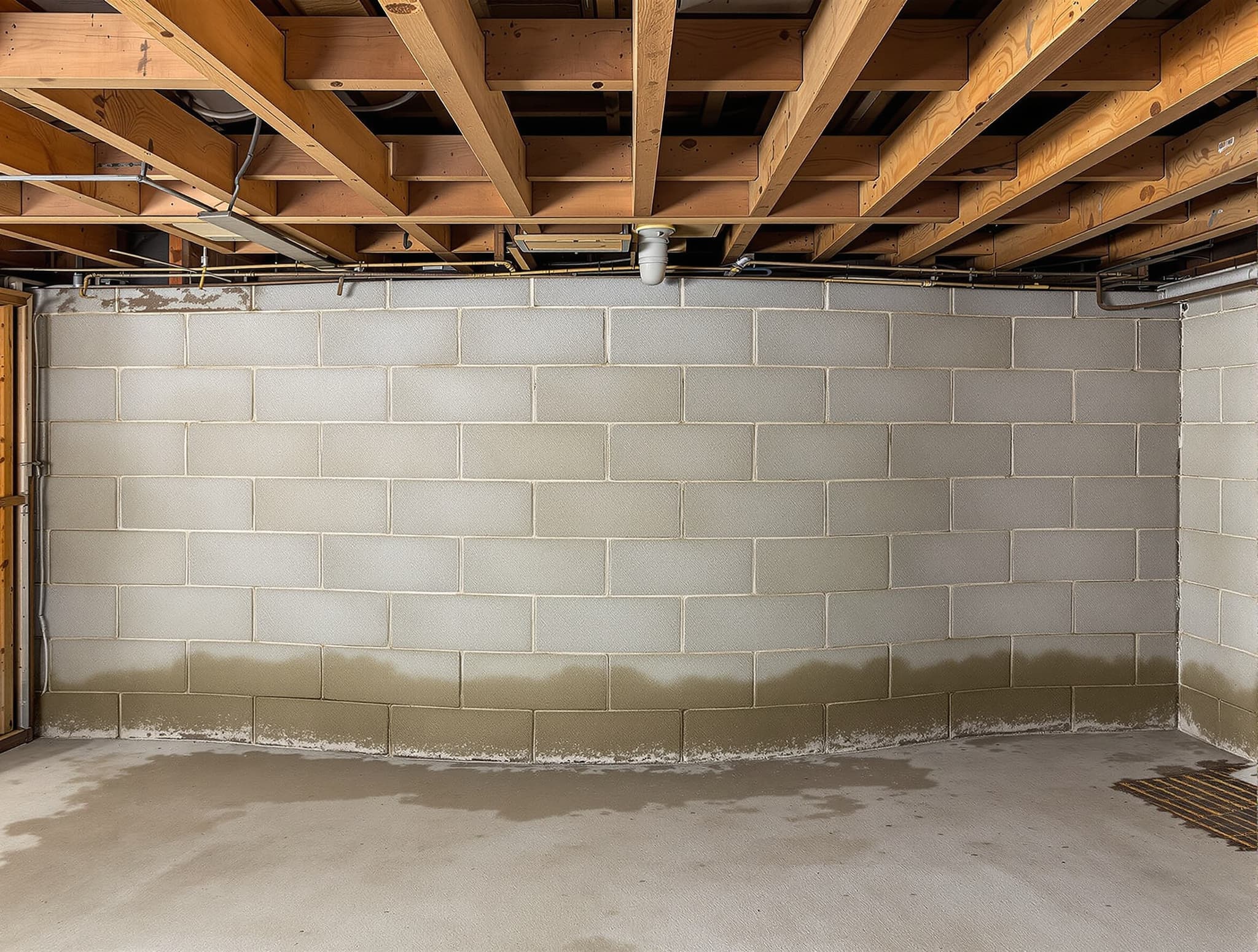
What an Interior French Drain Is
An interior French drain is a drain channel along the inside edge of the basement floor. It sits below the slab, next to the footing. Water that seeps in at the wall or rises under the floor flows into it.
The channel holds a perforated pipe bedded in stone. It slopes to a sump pit. A sump pump then sends the water outside through a discharge line.
Many systems also add a plastic membrane at the base of the walls. It guides water from the wall down into the drain.
The name has nothing to do with France. It comes from Henry French. He was a Massachusetts judge and farmer who wrote about farm drainage in the 1850s.
Signs You May Need an Interior French Drain
- Water at the joint where the wall meets the floor after heavy rain
- Water coming up through cracks in the floor
- A wet line or white mineral deposits along the bottom of the walls
- Puddles that come back after storms or when the water table is high
- A musty smell that a dehumidifier alone does not fix
Homes near the South Shore bays often sit close to the water table. After heavy rain or a storm tide, groundwater can rise under the slab. Water that comes up from below is the classic case for an interior drain.
This can be common in low-lying towns like Freeport in Nassau and Babylon in Suffolk.
When a Simpler Fix May Be Enough
Not every wet basement needs a full perimeter drain. Start with the simple checks.
- Clean the gutters and extend the downspouts several feet from the house.
- Make sure the soil slopes away from the foundation.
- Check for condensation. Summer humidity can wet cold walls and floors.
- Rule out plumbing leaks from pipes, the water heater or the washer.
A single leaking crack is another special case. Our page on sealing a leaking foundation crack explains that repair. If water still comes in after these fixes, a drain system is usually the next step.
Interior French Drain vs Exterior Waterproofing
Exterior waterproofing works from the outside. The soil is dug out down to the footing. A membrane goes on the wall and a drain goes in at the base.
Exterior work stops water before it reaches the wall. It also means digging around the house. That can disturb driveways, patios and landscaping.
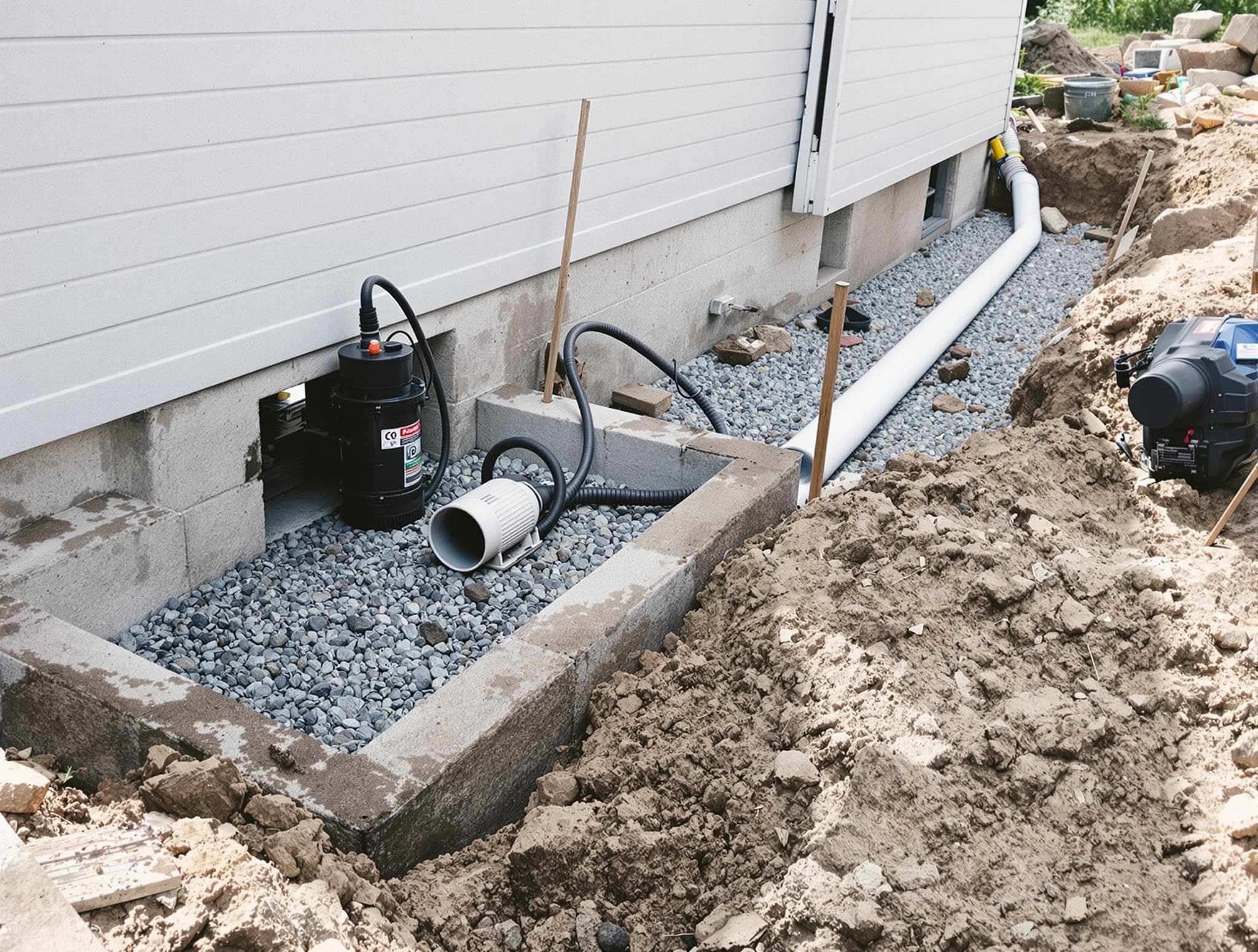
An interior drain does not stop water from reaching the wall. It manages the water once it arrives. When the water table rises under the slab, an interior drain is often the practical choice.
Our foundation waterproofing page covers both approaches. For a wider look, see our basement waterproofing guide for Long Island.
How an Interior French Drain Is Installed
- Stored items are moved away from the walls and the space is protected.
- A strip of the concrete floor is cut out along the walls.
- A trench is dug down beside the footing.
- Stone and a perforated pipe go into the trench.
- A sump pit and pump are set, with a discharge line to the outside.
- The trench is covered with new concrete.
Most jobs take a few days. Expect noise and dust while the concrete is cut.
The discharge line should carry water well away from the house. Many towns do not allow sump pumps to drain into the sanitary sewer.
What Affects the Cost of an Interior French Drain
Interior drains are usually priced by the linear foot of wall. National cost guides commonly list them at about $40 to $100 per linear foot. Your price depends on the house.
- The length of the basement perimeter
- How thick the floor is and how hard it is to cut
- Finished walls, stairs or a boiler in the way
- The sump pump setup and any battery backup
- A wall membrane or extra work at leaking cracks
- Where the discharge line can run outside
Ask for a written quote. It should list the linear feet, the pump and the discharge plan.
Keeping an Interior Drain System Working
The drain itself has few moving parts. The sump pump does the real work, so it needs the most care. Test it a few times a year by pouring a bucket of water into the pit. The pump should start on its own and empty the pit.
Check that the discharge line outside is clear, especially after snow or ice. A battery backup pump keeps water moving if the power goes out in a storm. Replace the backup battery on the schedule the maker lists.
Planning to Finish the Basement?
Put the drain in before you finish the basement. It is much harder to add once walls and floors are done. Keep the sump pit where you can reach it for service.
If the walls are cracking or bowing, fix that first too. Our basement wall repair page explains the options.