Basement Wall Repair
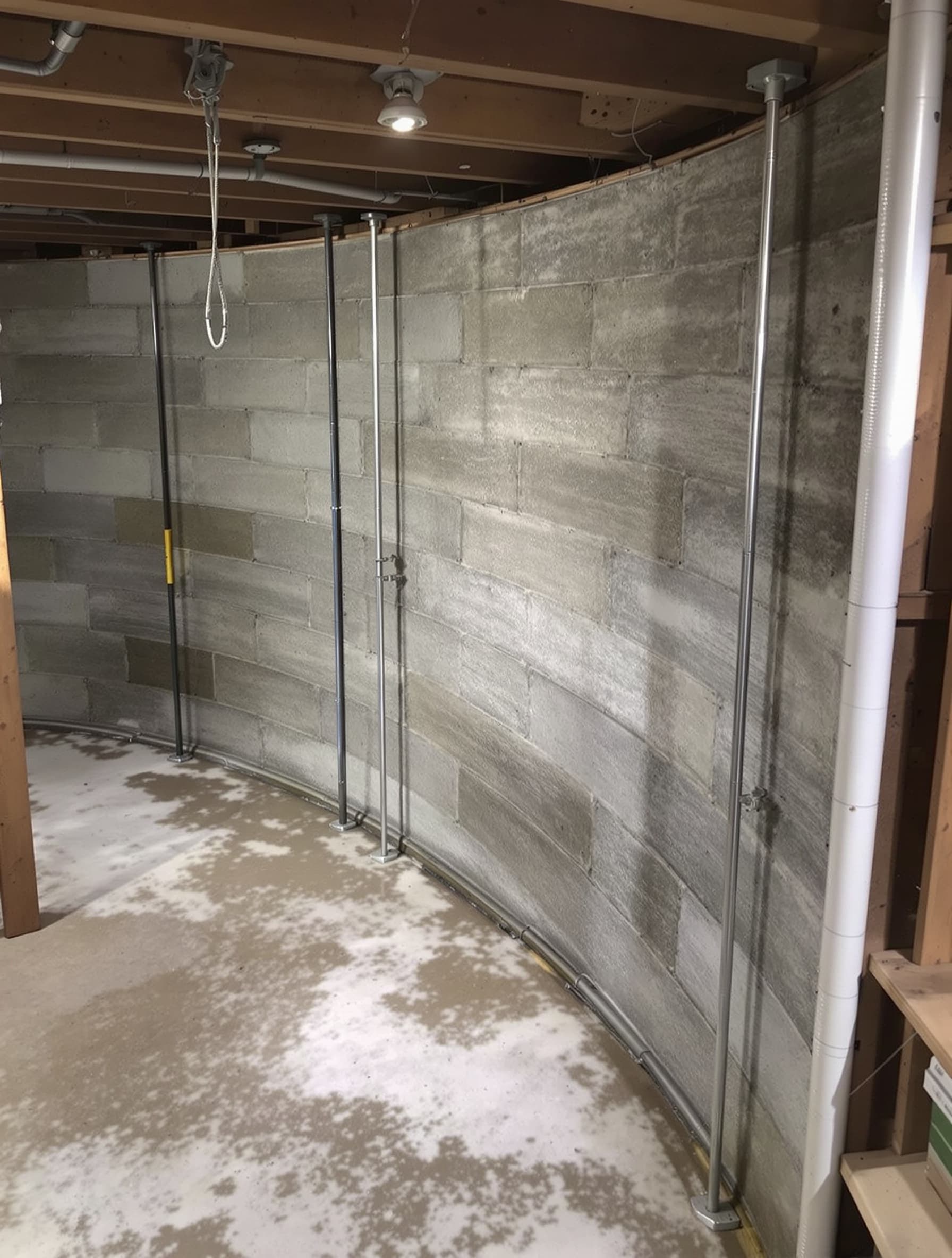
Leaning basement wall repair on Long Island is one of the most time-sensitive foundation jobs a homeowner will face. A wall that is tilting or bowing inward is under active lateral load — and that load does not stop between service calls. Long Island's 1940s through 1970s block foundations were built without modern reinforcement, and decades of clay soil expansion, frost-cycle pressure, and seasonal water table fluctuation push these walls inward year after year. Nassau County's dense glacial till and Suffolk County's saturated north-shore clay create some of the highest sustained lateral pressures on residential block walls in the metro area. Warning signs include horizontal cracks at mid-wall height, a visible inward curve when you sight down the wall from the corner, sticking basement windows, and gaps developing at the sill plate above. We measure deflection with a laser and plumb line at six points per wall, then engineer the repair to the actual load: carbon fiber straps bonded with structural epoxy for walls under two inches of bow, and steel wall-anchor systems tied back to the yard for more severe movement. Every non-trivial repair carries a PE-signed engineering report, and most carbon fiber installations complete in one day with zero excavation.
Engineered. Documented. Warrantied.
- 01Deflection measurement with laser and plumb line at six points per wall
- 02Soil pressure analysis — clay vs. sandy soils engineered differently
- 03Carbon fiber straps for deflection under 2" — no excavation, done in a day
- 04Steel wall-anchor systems for severe inward movement past 2"
- 05PE-signed engineering report on every non-trivial job
4 Steps. No Theatre.
Measure
Laser-leveled deflection readings at six points on every affected wall. Soil type noted from exterior grade.
Engineer
PE-signed repair plan sized to actual loading. Quantities and anchor placements calculated, not guessed.
Install
Carbon fiber epoxied vertically at 4-foot centers OR wall anchors threaded through to exterior plates, depending on severity.
Document
Before/during/after photos, stamped engineering drawing, lifetime system warranty.
Leaning Basement Wall Repair on Long Island: Full Cost + Soil Factor Guide
Signs of a leaning wall, Nassau vs. Suffolk soil factors, carbon fiber vs. wall anchor cost breakdowns, and when a leaning wall becomes a structural emergency. Everything Long Island homeowners need in one place.
Read the Long Island Wall Repair GuideBasement Wall Crack Repair in Nassau County
Basement wall crack repair in Nassau County is driven by the county's clay-heavy glacial till soil, which expands up to 15 percent when saturated and contracts during dry seasons. This cycle applies sustained lateral pressure against basement walls in Levittown, Hicksville, Massapequa, Hempstead, and every Nassau interior town — producing horizontal cracks at mid-wall height in block foundations and vertical cracks in poured concrete. We repair all crack types in Nassau County: epoxy injection for settled vertical cracks, carbon fiber straps for horizontal bowing cracks, and wall anchor systems for walls with more than two inches of inward deflection.
Nassau County's south shore communities — Baldwin (11510), Freeport (11520), Oceanside (11572), Valley Stream (11580), and Long Beach (11561) — face a compounding problem: the coastal water table sits within 4 to 8 feet of grade, so hydrostatic pressure pushes through cracks in addition to lateral soil movement. A crack injection alone is not enough in these areas; the repair must also address drainage. We diagnose the correct approach at the free on-site assessment.
All basement wall crack repairs in Nassau County requiring structural work are permitted through the Nassau County Building Department or the relevant Town building department. We handle every filing. Nassau HIC licensed. Free inspections available.
FAQ.
01Can carbon fiber fix any bow?+
02Will the wall keep moving after repair?+
03How much does leaning basement wall repair cost on Long Island?+
04What causes basement walls to bow in Long Island homes?+
05How do I know if my basement wall needs repair?+
06How do I fix a leaning basement wall in Nassau County?+
07Is a leaning basement wall dangerous?+
08What are the signs a Long Island basement wall is leaning?+
The Other Six Fixes.
Free Assessment.
Engineered Report.
A LI Foundation Co. tech will be on-site within a week. Assessment is free, report is included, no pitch at the end.
(516) 529-6996